
- Home
- Service & Repair
- Garage Door Repair
Service & Repair · Muskego, WI
Garage Door Repair in Muskego, WI
From a door that groans every morning to one that refuses to close, we find the real cause, explain it plainly, and fix it properly so your garage works the way it should again.
- Same-day service
- Price before we start
- Safety-tested
Full-Door Diagnosis
Every Strange Noise Has A Mechanical Reason
A garage door is a balanced machine, not just a big panel on a motor. Springs carry the weight, cables transfer that force to the bottom corners, rollers guide the sections through the tracks, and hinges let the panels bend around the curve. When one of those parts wears, the others start working harder to make up for it. That is why a small squeak left alone for a season often turns into a stuck door, a snapped cable, or an opener that burns out early.
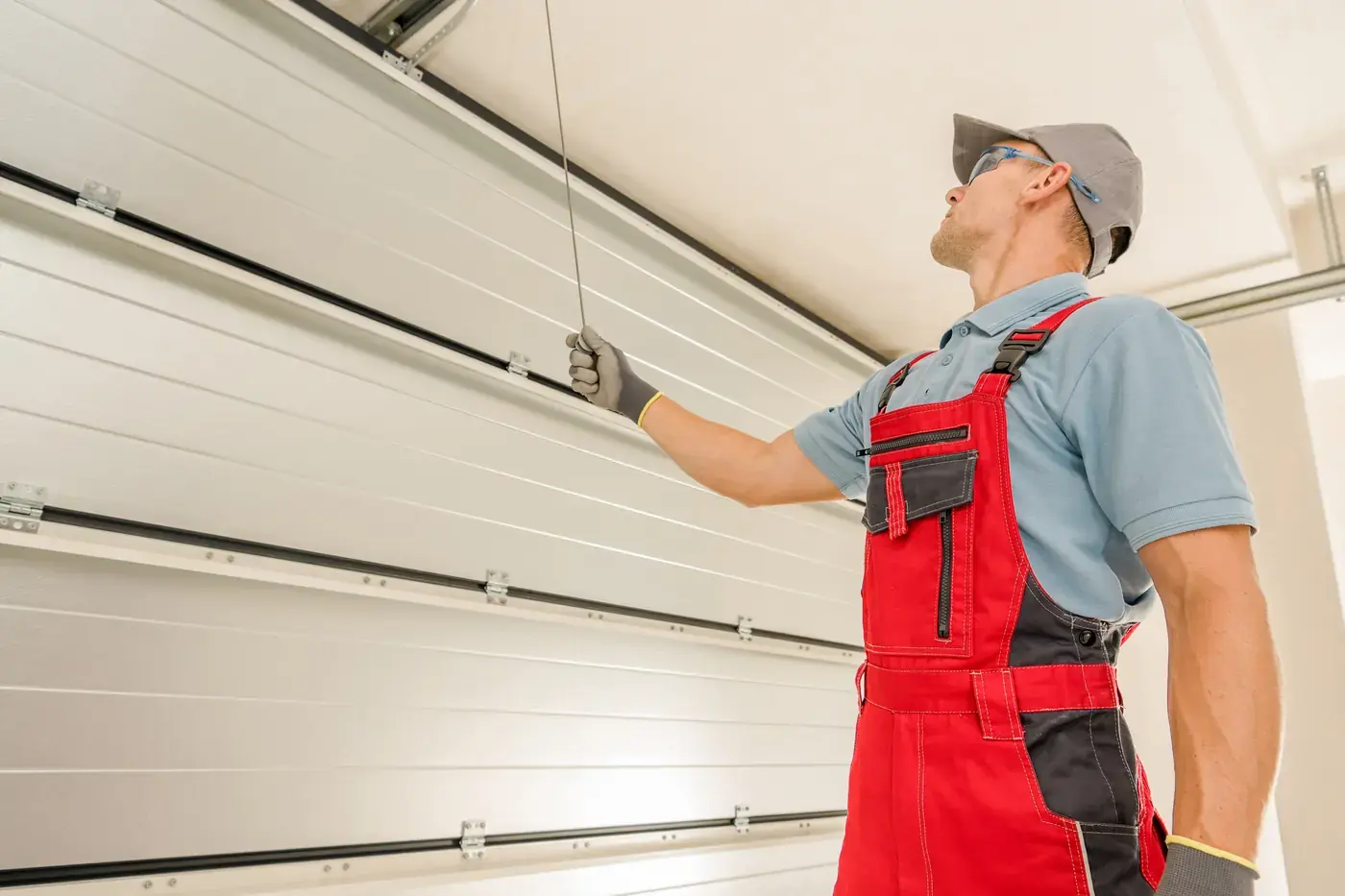
Our repair visits start with a full inspection rather than a guess. We lift the door by hand with the opener disconnected to feel whether it is balanced, watch how each roller travels through the track, check the cable wraps on the drums, and look for cracked hinges, loose brackets, and bent struts. Only after we understand the whole system do we recommend a fix, and we explain what we found in plain language so you can decide with confidence.
Homes around Muskego put garage doors through a lot. Humid air off Little Muskego Lake and Big Muskego Lake encourages rust on springs and track hardware, while subzero January snaps make lubricants stiffen and metal contract. Add road salt tracked in from Janesville Road and Racine Avenue, and you have a recipe for corrosion along the bottom of the door. We see these patterns every week, so we know where to look first.
What We Repair
One Visit Covers The Whole Door System
You do not need to figure out which part is broken before you call. Most homeowners only know the symptom: the door is loud, slow, crooked, or simply will not move. That is enough for us. Our trucks carry the common springs, cables, rollers, hinges, and opener parts that local doors use, which means most repairs are finished on the first visit instead of waiting on a second appointment.
We work on single and double doors, steel, wood, and composite panels, insulated and non-insulated models, and the older one-piece tilt-up doors still found on some lake cottages and detached garages. If a part is no longer made for an older door, we tell you honestly and walk you through the options, whether that is a compatible replacement part or, when it truly makes sense, a new door.
- Broken torsion and extension springs, replaced and balanced
- Frayed or snapped lift cables and worn cable drums
- Worn, cracked, or noisy rollers and bent tracks
- Cracked hinges, loose brackets, and sagging struts
- Opener problems, sensors, remotes, and wall buttons
- Weatherseals, bottom rubber, and retainer channels
Off-Track Doors
A Crooked Door Needs Careful Hands
A door that comes off its tracks usually hangs at an angle, with one side lower than the other or rollers poking out of the rail. It can happen after a car bumps the door, when a cable fails on one side, or when worn rollers finally slip out of a bent track. The door is under heavy spring tension in this state, and it can shift or drop without warning, so please do not try to force it back or run the opener.
When we arrive we secure the door first, usually clamping it in place and relieving tension where needed. Then we straighten or replace damaged track sections, reset the rollers, inspect both cables and drums, and rebalance the springs. A door that has jumped its track almost always has an underlying cause, and we find and fix that cause so it does not happen again the next time the temperature drops below zero.
Off-track doors are common in the tight driveways of the 1970s through 1990s subdivisions near Tess Corners, where a slight misjudgment backing out can catch the bottom panel. They also show up on detached garages near Lake Denoon where tracks have been fighting frost heave for decades. Either way, the fix is the same careful process, and we leave the door running straight and quiet.
What To Look For
Signs Your Door Needs A Repair Visit
Grinding Or Squealing Noises
Loud metal-on-metal sounds usually point to dry or worn rollers, hinges, or bearings. Caught early, these are quick fixes that protect the rest of the door.
Door Will Not Close
A door that reverses or stops partway may have misaligned sensors, a bent track, or a balance problem. We test each possibility and correct the real cause.
One Side Hangs Lower
An uneven door often means a slipping or broken cable or a failing spring on one side. Stop using it to avoid further damage.
Sagging Middle Panels
Panels that bow in the middle can strain hinges and rollers. Reinforcing struts and hinge replacement bring the door back into shape.
Jerky Or Slow Travel
Stuttering movement signals binding rollers, tight tracks, or springs losing tension. The opener is working harder than it should every cycle.
Gaps At The Bottom
Daylight, drafts, or water under the door mean a worn bottom seal or uneven floor contact. New weatherseal keeps out cold, snow, and pests.
Our Process
How We Handle Garage Door Repair
Listen And Inspect
We start by hearing what you have noticed, then inspect the door, springs, cables, rollers, tracks, and opener. Nothing gets replaced until we understand how the whole system is behaving.
Explain And Quote
You get a clear explanation of what is wrong and what we recommend. We quote the price before we start, so there are no surprises when the work is done.
Repair The Door
We replace or adjust the failing parts using components sized for your door. Most repairs are completed on the same visit with parts from our truck.
Balance And Test
We balance the springs, lubricate moving parts, and run the door through several full cycles. Safety reversal and sensors are tested before we leave.
Seasonal Wear
Wisconsin Weather Is Hard On Hardware
Cold is the biggest enemy of garage door hardware. Steel springs become more brittle in subzero temperatures, which is why so many springs break on the first truly frigid morning of the year. Grease thickens, rollers drag, and the opener has to strain against a door that suddenly feels much heavier. If your door works fine in October but struggles in January, the problem is usually balance and lubrication rather than the opener itself.
Snow and ice create their own trouble. Drifts piling against the bottom seal can freeze the door to the slab, and when the opener tries to lift it, something has to give. That is often the bottom rubber, a cable, or the opener gears. If your door is frozen down, chip the ice away gently or let the garage warm up before trying again, and never pry the bottom edge with a shovel.
Summer brings different problems. Hot, humid days off the lakes swell wood doors and dry out weatherstripping, while spring storms push rain under worn seals. We adjust and service doors for the season so they open smoothly through every kind of Muskego weather, whether you live near Muskego Park or out toward Big Bend and Wind Lake.
Homeowner Safety
Know What To Leave To A Trained Technician
There is plenty a homeowner can do safely. Keep the photo-eye sensors clean, clear the tracks of leaves and debris, test the auto-reverse with a roll of paper towels once a month, and spray the hinges and roller bearings with a garage-door lubricant a couple of times a year. These small habits catch problems early and keep the door quiet.
Springs and cables are a different story. Torsion springs store enormous energy when the door is closed, and the cables carry that same load to the bottom brackets. Loosening the wrong set screw or unhooking a cable can release that force in an instant, causing serious injuries. Please do not adjust torsion springs or cables yourself, even with a video tutorial in hand. That is exactly the job we are trained and equipped to do.
If something feels wrong, the safest step is to stop using the door and give us a call. Leave it closed if it is stuck closed, and keep people and pets away if it is stuck open. We will talk you through the situation, explain what we expect to find, and schedule a visit as quickly as we can, including same-day service when you call early.
- Do clean the photo-eye lenses and keep them aligned
- Do test the auto-reverse with an object under the door monthly
- Do lubricate hinges and roller bearings a few times a year
- Do not loosen torsion spring set screws or winding cones
- Do not unhook, cut, or re-wrap lift cables yourself
Garage Door Repair FAQ
Questions About Garage Door Repair
Most doors are well worth repairing. Springs, cables, rollers, hinges, and seals are all designed to be replaced as they wear, and fixing them restores the door to smooth operation. We only suggest replacement when panels are badly damaged, rusted through, or parts are no longer available, and we explain why so you can make the call.
A little extra noise is not an emergency, but it is a warning. Grinding, popping, or banging often means a part is close to failing, and running the door can make the damage worse. If the door also moves unevenly or hesitates, stop using it and schedule a repair visit.
Many repairs, such as rollers, a single cable, or hinge replacement, take about an hour or so. Spring replacements and off-track doors can take longer depending on the condition of the tracks and hardware. We will give you a realistic time estimate once we see the door.
Yes. Along with Muskego we regularly work in New Berlin, Franklin, Hales Corners, Big Bend, Wind Lake, Greenfield, Waterford, and Vernon. If you are nearby and not sure whether we cover your street, just ask when you call.
Cold weather thickens lubricants, stiffens rollers, and changes how springs behave, so a door that is slightly out of balance becomes noticeably harder to lift. Ice along the bottom seal can also hold it down. A seasonal tune-up with proper lubrication and spring adjustment usually solves the problem.
Clear a little space around the door and the opener so we can work safely, and keep children and pets away from the garage. If the door is stuck, leave it where it is rather than forcing it. Let us know about any noises or events, like a car bumping the door, that happened before the problem started.
Muskego Garage Door Pros
Get Your Garage Door Working Right
Tell us what your door is doing and we will diagnose it, quote it up front, and fix it properly, often the same day when you call early.
More Services
Other Ways We Help Muskego Homeowners
 Service & Repair
Same Day Repair
Door stuck open or car trapped inside? Call early and we work to get you moving today.
Learn More →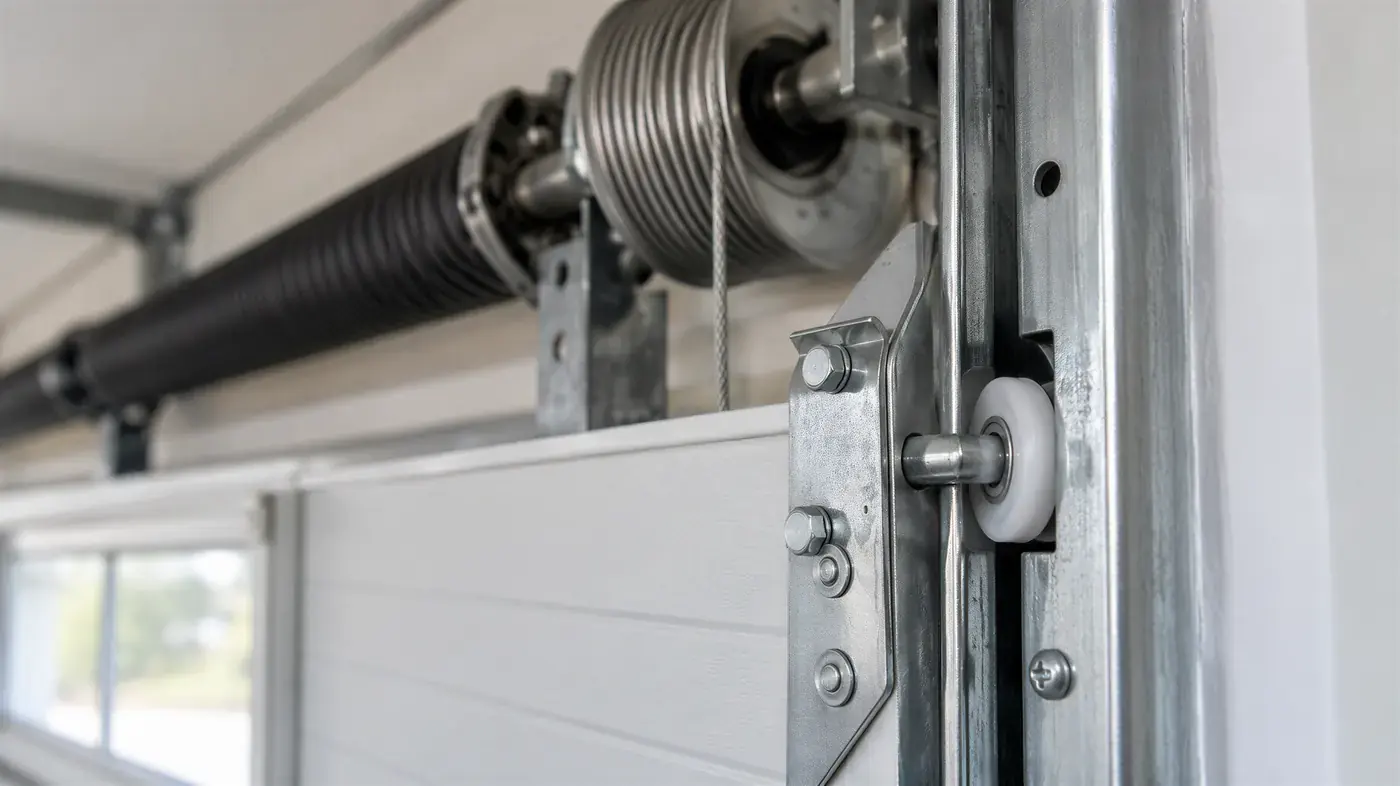 Service & Repair
Spring Replacement
Torsion and extension springs sized to your door's weight and balanced by hand.
Learn More → Service & Repair
Cable Replacement
Frayed or snapped lift cables replaced and wound evenly so the door rises level.
Learn More →